 Auto Car Deal us
Related Articles



How to Change Car Battery
Knowing When Your Car Battery Needs Replacement
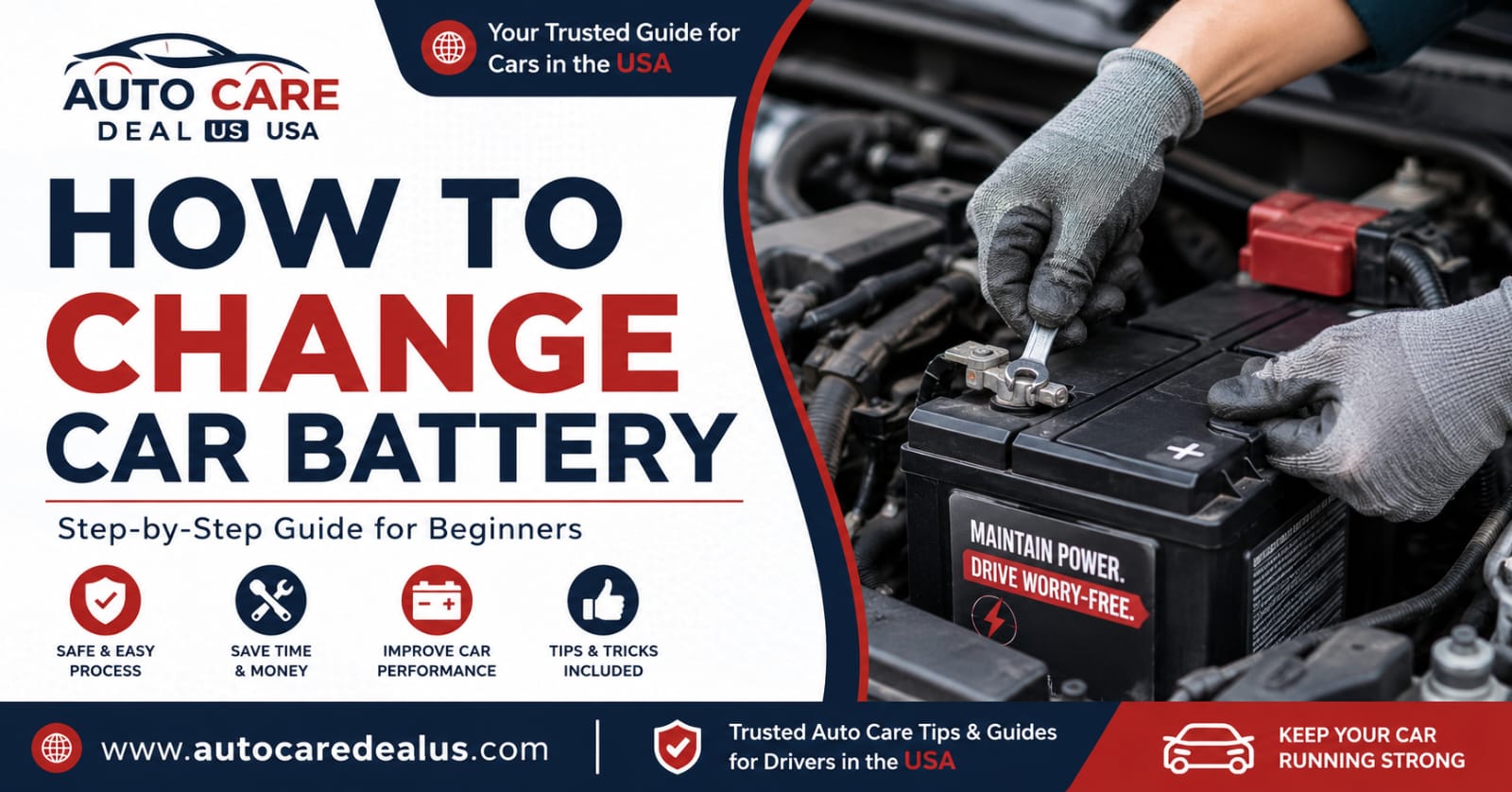
Learning how to Change Car Battery in USA can help prevent unexpected roadside breakdowns. Most automotive batteries provide dependable service for approximately three to five years. However, extreme temperatures, frequent short trips, and heavy electrical demands can shorten battery life. Common warning signs include slow engine cranking, dim headlights, clicking sounds, and dashboard battery warnings. Visible corrosion, swelling, cracks, or leaking also indicate possible battery problems. AAA recommends testing older batteries regularly and replacing them before complete failure occurs. How to Change Car Battery
2. Choose the Correct Replacement Battery
Selecting the correct replacement battery is essential for reliable starting performance. Check your owner’s manual before purchasing any replacement battery for your vehicle. Important specifications include battery group size, cold cranking amps, and reserve capacity. Battery technology also matters because some vehicles require AGM or specialized battery designs. The replacement should match the original battery’s dimensions and terminal configuration. Using an incorrect battery can create fitting, charging, or electrical system problems. AAA recommends checking physical size, ratings, post location, and vehicle requirements carefully. How to Change Car Battery
3. Collect the Required Tools and Safety Equipment
Prepare all necessary equipment before opening your vehicle’s battery compartment. Basic tools usually include gloves, safety glasses, and a suitable wrench. A socket set can help when battery terminals or hold-down brackets are difficult. A wire brush can remove corrosion from battery terminals and cable connectors.Keep a clean cloth nearby to protect exposed connections during the battery replacement.Always remove jewelry because metal objects can accidentally create dangerous electrical connections. Never smoke or create sparks around a battery during maintenance work.
4. Park and Prepare the Vehicle Safely
Park the vehicle on a level surface before beginning the battery replacement process.Apply the parking brake and make sure the engine is fully turned off.Turn off headlights, interior lights, entertainment systems, and other electrical accessories. Remove the ignition key and keep it away from the vehicle. Open the hood and secure it using the manufacturer’s recommended support mechanism. Locate the battery and identify both terminals before touching any connections. Some modern vehicles position batteries inside trunks or specialized compartments. Always consult your owner’s manual when the battery location seems unfamiliar.
5. Disconnect the Old Battery Correctly
Disconnecting the battery in the correct sequence reduces the chance of electrical shorts. Identify the negative terminal using the minus symbol and usually black cable. Loosen the negative terminal connection carefully with the appropriate wrench. Remove the negative cable and position it away from the battery terminal. Next, loosen and remove the positive cable from its terminal. Avoid allowing metal tools to touch both battery terminals simultaneously during removal. This precaution helps prevent sparks, electrical damage, or accidental short circuits.
6. Remove the Battery From Its Mounting Tray
After disconnecting both cables, locate the battery hold-down bracket or retaining strap. Remove the bolts or fasteners securing the battery inside its tray. Car batteries can be surprisingly heavy, so lift them using proper technique. Keep the battery upright because tipping may cause harmful electrolyte leakage. Place the old battery somewhere stable while preparing the replacement. Inspect the battery tray for corrosion, dirt, cracks, or other visible damage. Cleaning the tray and cable connections can support better electrical contact afterward. How to Change Car Battery
7. Install and Secure the New Battery
Place the replacement battery carefully inside the vehicle’s battery tray. Confirm that the battery sits flat and matches the original orientation. Reinstall the hold-down bracket or retaining strap before connecting electrical cables. The battery must remain firmly secured against movement and excessive vibration. Loose batteries can experience physical damage and reduced service life over time. Confirm that terminal positions match the vehicle’s original cable arrangement. Do not force cables into positions that create excessive pressure or stretching.
8. Reconnect the Battery Terminals
Reconnect the positive terminal first after the replacement battery is secured. Tighten the positive connection firmly without applying excessive force to the terminal. Then connect the negative terminal and tighten its connection securely. Ensure both terminals remain clean, tight, and properly positioned after installation. Loose connections can cause starting problems and inconsistent electrical performance. Inspect the battery cables for corrosion, damaged insulation, or unusual wear. Some modern vehicles may require additional electronic procedures after battery replacement. Check the owner’s manual for any required battery registration or system reset.
9. Test the Vehicle and Dispose of the Old Battery
After installation, inspect the entire battery compartment before starting your vehicle. Confirm that the battery is secure and both terminal connections remain tight. Start the engine and listen for normal, consistent cranking performance. Check headlights, dashboard electronics, windows, and other electrical accessories afterward. If warning lights appear, consult the owner’s manual or a qualified technician. A replacement battery may not solve problems caused by alternator failure or electrical drains. Never place an old automotive battery into regular household garbage. Lead-acid batteries should be returned through appropriate recycling programs or retailers.
10. Common Questions About Replacing a Car Battery
How can I know whether my battery needs replacement?
Slow starting, dim lights, corrosion, repeated jump-starts, and advanced battery age indicate replacement. A professional battery and charging-system test can confirm the problem accurately.
What battery specifications should I check before purchasing one?
Check group size, CCA rating, reserve capacity, battery technology, and terminal arrangement. Your owner’s manual provides the most reliable compatibility information for your specific vehicle.
Why should I disconnect the negative terminal first?
Disconnecting negative first reduces the risk of accidental electrical shorts. Proper terminal sequence also helps protect sensitive vehicle electronics during battery removal.
When should I ask a professional to replace my battery?
Seek professional assistance when battery access is difficult or safety concerns arise. Professional help is especially useful for damaged, leaking, swollen, or specialized batteries.
Auto Car Deal US recommends following your vehicle manufacturer’s maintenance instructions carefully. Proper battery selection, safe installation, and regular testing support dependable vehicle operation. Drivers should prioritize safety whenever electrical components require hands-onmaintenance. Professional technicians remain the safest choice when replacement procedures seem uncertain.
