 Auto Car Deal us
Related Articles


How to Inspect Tire Tread: A Complete Guide for US Drivers
1. Introduction to Tire Tread Inspection
Learning how to check tire in USA conditions helps drivers maintain safer vehicles and avoid unnecessary tire problems. Tire tread provides the grip needed for braking, steering, and accelerating. Proper tread depth also helps tires move water away from contact surfaces.New York drivers experience changing weather, rainy roads, and occasional snow. These conditions make routine tire inspections essential for safer driving. Auto Car Deal US recommends checking tires routinely and following vehicle manufacturer guidance. A simple tread inspection can reveal uneven wear, damaged rubber, and tires requiring replacement.How to Inspect Tire Tread: A Complete Guide for US Drivers
2. Why Tire Tread Depth Matters How to Inspect Tire Tread: A Complete Guide for US Drivers
Tire tread depth affects traction, stopping distance, and overall driving stability. Deep tread channels help disperse water during rainy weather. When tread becomes shallow, tires may struggle to maintain road contact. This increases the risk of hydroplaning on wet pavement. Worn tires can also reduce control during sudden braking or sharp turns. New York drivers should pay attention before rainy seasons and winter weather. Routine checks help detect potential issues before they develop into serious problems. Maintaining suitable tread depth supports safer driving on highways, neighborhood streets, and busy urban roads.How to Inspect Tire Tread: A Complete Guide for US Drivers
3. Understand the Legal Minimum Tread Depth
In the United States, tire tread depth is commonly measured in thirty-seconds of an inch. A new passenger-car tire often begins with approximately 10/32 to 11/32 inch of tread. Many safety recommendations suggest replacing tires at 4/32 inch when wet-weather traction matters. The commonly cited legal minimum for passenger tires is 2/32 inch, although requirements depend on applicable laws.Drivers should check New York’s current inspection rules rather than relying solely on tread measurements. Meeting the legal minimum does not necessarily mean a tire performs well in rain or snow.How to Inspect Tire Tread: A Complete Guide for US Drivers
4. Use a Tire Tread Depth Gauge
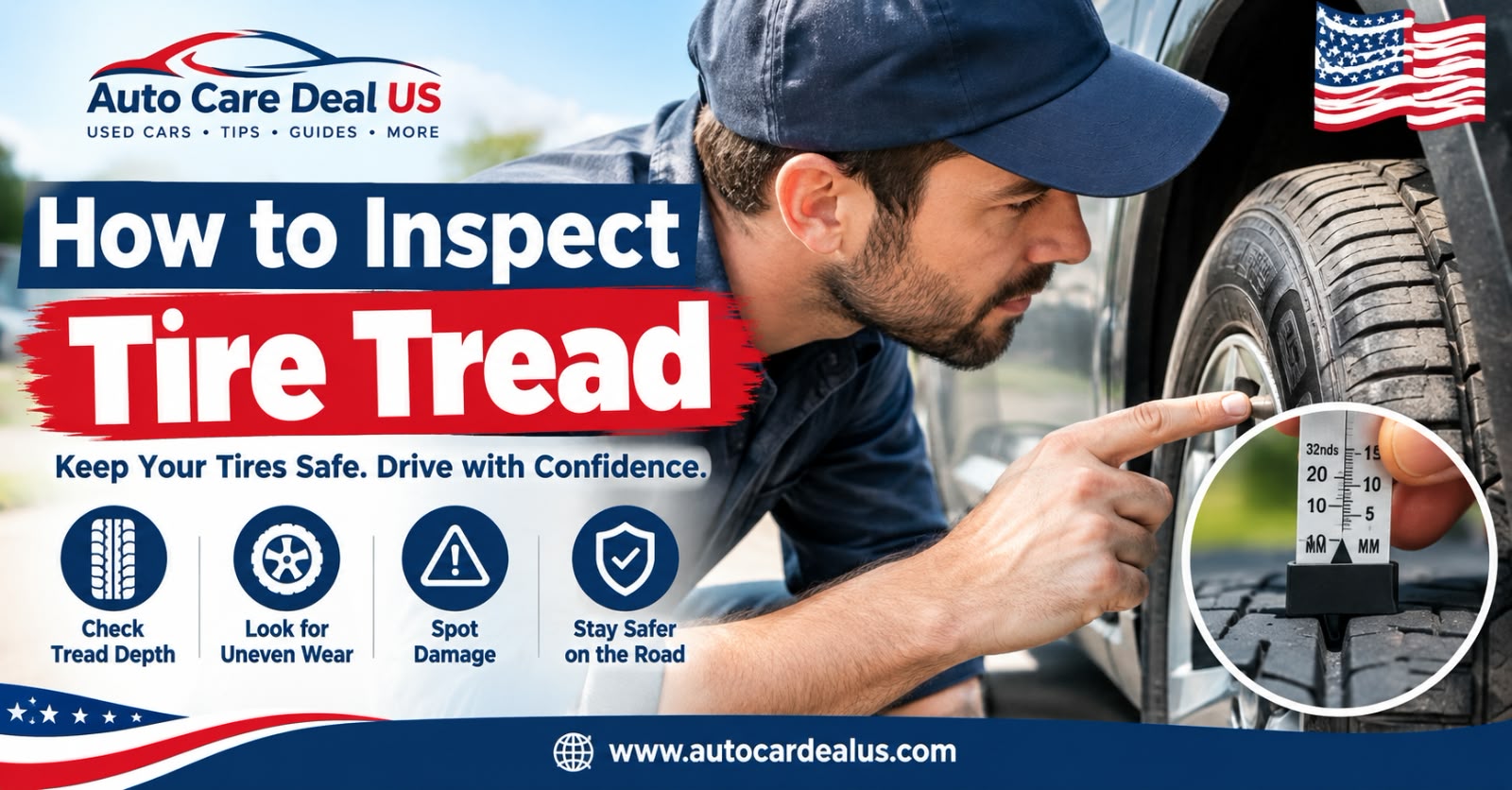
A tread depth gauge provides a reliable way to measure remaining tire tread. These inexpensive tools are available at many automotive stores and online retailers.Park the vehicle on a flat surface and apply the parking brake before starting the inspection. Insert the gauge probe into a main tread groove, avoiding raised tread wear indicators. Press the gauge base against the adjacent tread blocks and read the measurement. Check multiple spots on each tire to get an accurate tread depth reading. Replace or professionally inspect tires when measurements approach recommended replacement limits.
5. Check Tread Wear Indicator Bars
Most modern passenger-car tires include built-in tread wear indicator bars.These raised bars are located within the main grooves between the tire’s tread blocks. As the tire wears, the surrounding tread gradually approaches their height. When the tread becomes level with these indicators, the tire has reached approximately 2/32 inch. Inspect several indicator bars around each tire because wear may vary. However, indicator bars cannot identify every tire problem. Drivers should also check for cracks, bulges, punctures, and other visible damage.
6. Try the Penny Test Carefully How to Inspect Tire Tread: A Complete Guide for US Drivers
The penny test offers a quick preliminary check when a tread gauge is unavailable. Insert a penny into a major tread groove with Abraham Lincoln’s head facing downward. If the top of his head remains fully visible, the tread may be dangerously worn. This simple method is only a rough screening tool, not an exact measurement. It cannot replace a tread depth gauge or professional inspection. Drivers should examine multiple grooves across each tire. If results appear borderline, measure the tread accurately and ask a qualified tire technician for advice.
7. Inspect Uneven Tire Wear Patterns
Uneven tread wear can indicate alignment problems, incorrect tire pressure, or suspension issues.Wear on both tire edges may indicate low tire pressure. Meanwhile, excessive center wear can suggest over inflation. If one side wears faster, check the wheel alignment and suspension components. Cupping or scalloped patches can also indicate balancing or suspension concerns.Examine both front and rear tires because their wear patterns can vary. Rotating tires according to the manufacturer’s schedule can promote more even wear. Persistent uneven wear requires professional diagnosis rather than simply replacing the tire.
8. Check Tires Before New York Winter Driving
Cold temperatures can affect tire pressure, while snow and ice demand dependable traction. Check tire tread depth, rubber condition, and inflation pressure before winter begins. Tires with limited tread may perform poorly on slushy roads and packed snow.Choose appropriate winter tires if you frequently drive on snowy or icy roads. All-season tires may suit many drivers, but they are not equivalent to dedicated winter tires in every condition. Check the vehicle manual for suitable tire specifications.
9. Know When to Replace Worn Tires
Replace tires when tread reaches the applicable legal minimum or the manufacturer’s replacement guidance. Replacing tires sooner is advisable when their performance on wet roads starts to decrease. Tires also require prompt professional attention when they show exposed cords, significant bulges, deep cuts, or serious structural damage. Age matters too, even when tread remains visible. Follow the tire manufacturer’s guidance about inspection and service life. If you experience vibrations, ongoing pressure loss, or unusual handling, have your tires inspected by a professional. Avoid driving on visibly damaged tires because sudden tire failure can create serious safety risks.
10. Final Tire Inspection Tips from Auto Car Deal US
Check tread depth monthly and before extended road trips. Measure several areas on every tire instead of checking one groove.Keep tires inflated to the pressure listed on the vehicle’s door placard, rather than the maximum shown on the tire sidewall. Rotate tires and schedule wheel alignment when recommended by the manufacturer.Drivers in New York should check their tires carefully before rainy and snowy weather arrives. If tread measurements are uncertain, visit a qualified tire professional. Consistent inspections help improve traction, identify wear early, and support safer driving throughout the year.