 Auto Car Deal us
Related Articles
How To Check Tire Pressure
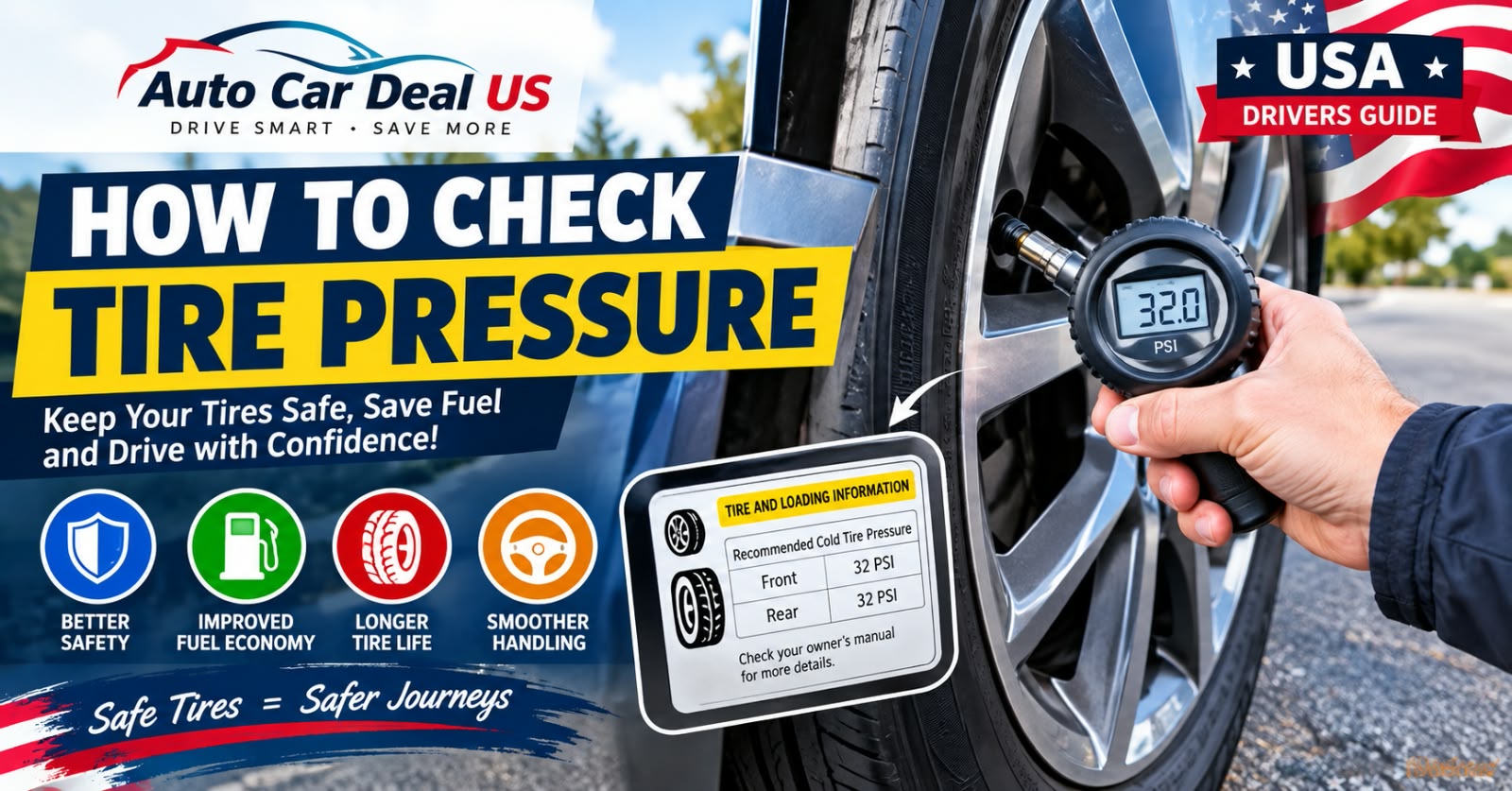
Proper Tire Pressure in USA helps drivers maintain safer handling and better tire performance. Correct inflation also supports even tread wear and fuel efficiency. NHTSA recommends checking every tire at least once monthly.Drivers should inspect tire pressure before starting long journeys. this information is usually displayed on the driver’s door placard. The owner’s manual also provides the correct pressure information.Do not use the tire sidewall pressure as your regular inflation setting. That number usually shows the tire’s maximum permitted pressure.Learn how to check tire pressure correctly, maintain proper PSI, improve safety, and support better fuel efficiency with simple tips.Learn how to check tire pressure correctly, maintain proper PSI, improve safety, and support better fuel efficiency with simple tips. How To Check Tire Pressure
1. Find Your Vehicle’s Recommended PSI
Start by finding the correct pressure specification for your vehicle. Look along the driver’s door edge or doorjamb. Most vehicles have a Tire and Loading Information label there.The owner’s manual may also provide this information for certain vehicle models. The label normally lists recommended cold inflation pressure.The recommended pressure may differ between the front and rear tires. Always follow those specific vehicle recommendations.Avoid using the maximum PSI listed on the tire sidewall. Vehicle manufacturers select pressure according to vehicle design and load.
2. Check Tires When They Are Cold
Checking tire pressure when the tires are cold gives the most accurate reading. NHTSA defines cold tires as those unused for about three hours.Driving generates heat that temporarily raises the air pressure inside tires. Checking pressure immediately afterward may show a higher reading. Therefore, check your tires before driving whenever possible. Morning checks are often convenient for vehicle owners. If you recently drove, allow sufficient cooling time first. This simple habit makes pressure adjustments more accurate.
3. Choose a Reliable Tire Pressure Gauge
A reliable tire pressure gauge helps provide easier and more accurate readings. Drivers can choose digital, dial, or stick-style gauges. Digital gauges usually provide an easy-to-read PSI measurement. Keep a gauge inside your vehicle for convenient inspections. A portable gauge can help during road trips and emergencies. Make sure the gauge fits securely onto the valve stem.A loose connection may result in inaccurate pressure readings. Check your gauge occasionally against a trusted service station gauge. Proper equipment supports consistent tire maintenance.
4. Remove the Valve Stem Cap
Park your vehicle on a flat, level surface before checking the tires . Turn off the engine and secure the vehicle properly. Locate the valve stem on each tire. Unscrew the small valve cap carefully and place it nearby. Avoid dropping the cap where dirt can enter the alve. Firmly attach the pressure gauge to the tire’s valve stem. A brief hiss may occur during connection. A proper seal should stop continuous air leakage.
5. Compare the Reading With Recommended PSI
Compare each measured reading with the manufacturer’s specification.Some vehicles have different recommended pressure levels for their front and rear tires. Never assume every tire should have identical inflation. Compare the actual PSI with the door placard information. If pressure is high, release small amounts carefully. Recheck the tire after every adjustment. Continue until the recommended cold pressure is reached. NHTSA recommends checking all tires during the same inspection.
6. How to Add Air When Tire Pressure Is Low
Low tire pressure requires additional air before normal driving.Securely connect the compressor hose to the tire valve stem. Add air in short intervals rather than continuously. Check the pressure after each short inflation cycle. Stop when the recommended PSI appears on the gauge. Replace the valve cap after completing the adjustment. Underinflated tires can affect handling and tire wear.
7. How to Reduce Tire Pressure When It Is Too High
Overinflated tires should also be corrected carefully. Excess pressure can change handling and ride characteristics. Use the gauge to monitor pressure during air release. Press the valve stem gently to release small amounts. Check the reading again after each adjustment. Avoid removing large amounts of air at once. Continue until the manufacturer’s recommended PSI is reached. Remember that the sidewall maximum is not your normal target. Follow the vehicle placard instead for proper inflation.
8. Check the Spare Tire and Inspect for Damage
Do not forget the spare tire during routine maintenance. Some spare tires require a different pressure specification. Check its information using the vehicle manual or placard. Also inspect every tire for visible damage. Look for cuts, cracks, punctures, bulges, and unusual wear. A damaged tire may require professional inspection. NHTSA recommends inspecting tires regularly and before long trips. This inspection adds another important layer of tire safety.
9. Understand the Tire Pressure Monitoring System
Modern vehicles commonly include a Tire Pressure Monitoring System. TPMS can warn drivers when tire pressure drops below safe levels. However, drivers should still check tire pressure manually on a regular basis. drivers should not depend entirely on the warning light. NHTSA recommends regular manual pressure checks as well. TPMS warnings can identify pressure problems during everyday driving. Seasonal temperature changes can also influence tire inflation readings.
10. Include Regular Tire Pressure Checks in Your Vehicle Maintenance Routine
Regular inspections help drivers identify pressure changes before problems develop. Inspect it again before taking long highway trips. Also examine your tires after hitting potholes, curbs, or road debris. Temperature changes may also require more frequent monitoring. Keep a tire gauge and emergency inflation equipment available. Proper inflation supports handling, tire durability, and fuel consumption. Auto Car Deal US recommends following the manufacturer’s maintenance guidance. Consistent checks can make routine vehicle ownership easier and safer.