 Auto Car Deal us
Related Articles

How To Check Engine Light Codes
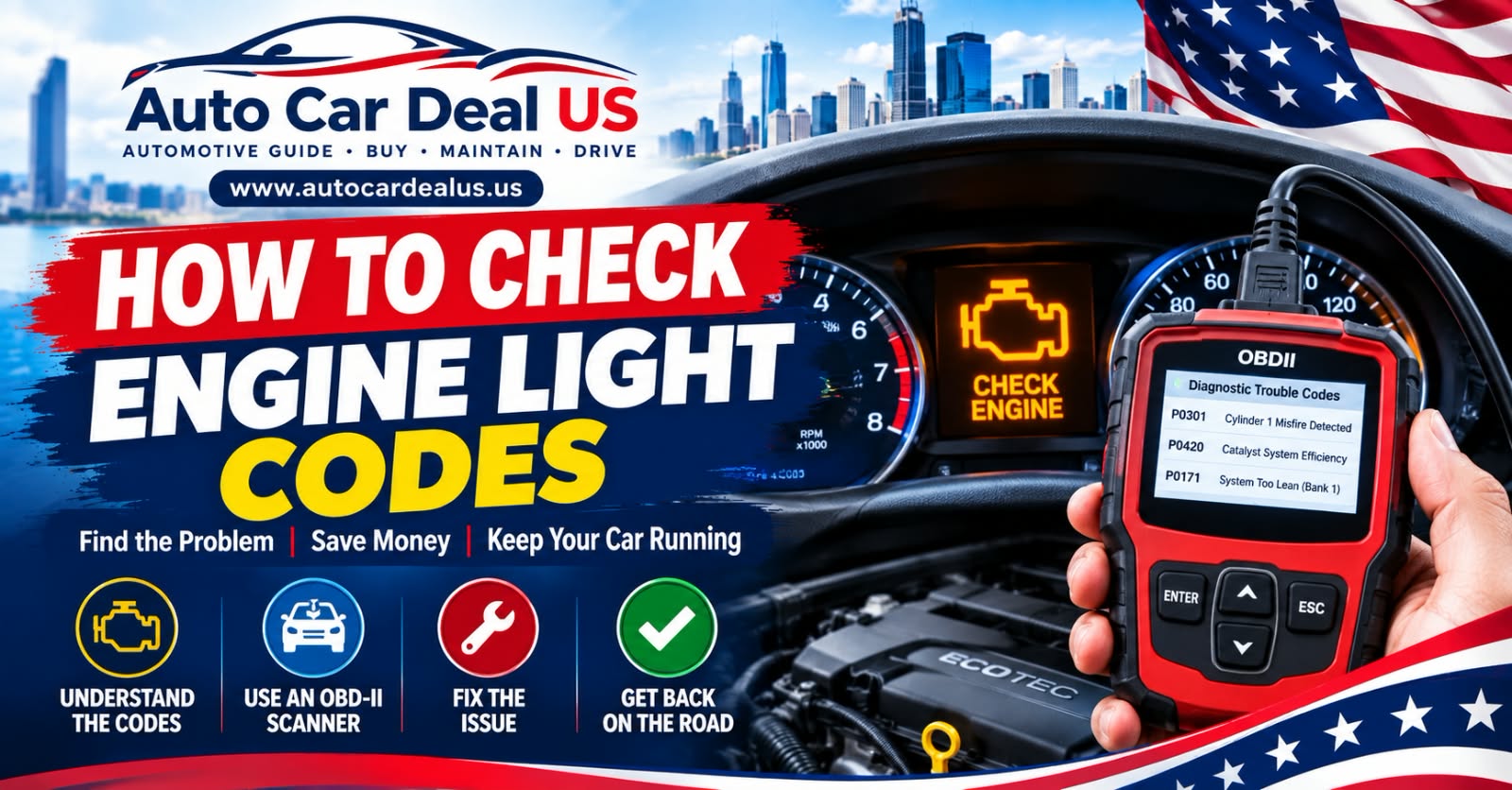
If your dashboard shows Check Engine Light in USA, your vehicle’s onboard computer has detected a possible fault. Modern vehicles use an On-Board Diagnostics system, commonly called OBD-II. This system monitors engine, emissions, and related components during operation. Most cars and light trucks from model year 1996 onward use standardized OBD-II systems. When a monitored problem occurs, the computer can store a Diagnostic Trouble Code, or DTC. Understanding these codes helps drivers identify potential problems before repairs become more complicated.How To Check Engine Light Codes
2. Locate the OBD-II Diagnostic Port
The first step involves finding your vehicle’s OBD-II diagnostic connector. This port is usually located underneath the dashboard near the driver’s seating position. However, its exact location can vary between vehicle manufacturers and models. Your owner’s manual can help you locate the connector quickly. Before connecting anything, park the vehicle safely and switch the ignition off. Check the connector for visible damage, dirt, or loose wiring. EPA inspection guidance also identifies the data link connector as the interface between the vehicle computer and diagnostic scanner.How To Check Engine Light Codes
3. Choose a Compatible OBD-II Scanner How To Check Engine Light Codes
An OBD-II scanner reads stored diagnostic trouble codes from your vehicle’s computer. Basic code readers can retrieve generic power train codes and display simple descriptions. More advanced scan tools can access additional modules, live data, freeze-frame information, and manufacturer-specific systems. Choose a scanner that supports your vehicle’s model year and diagnostic protocol. Some modern vehicles require enhanced diagnostic capabilities beyond basic generic scanning. You can also have the vehicle scanned by a qualified repair professional. Always follow the scanner manufacturer’s instructions before starting the diagnostic procedure.How To Check Engine Light Codes
4. Connect the Scanner to Your Vehicle
With the ignition switched off, plug the scanner into the diagnostic connector. Make sure the connector fits securely without forcing the device into place. Turn the ignition to the position recommended by your scanner’s instructions. Some scanners receive power directly through the diagnostic connector. Others may require additional setup through their display or mobile application. Follow the prompts shown on your specific device carefully. EPA testing procedures similarly involve connecting test equipment to the vehicle’s diagnostic connector before checking stored information.
5. Read the Diagnostic Trouble Codes
After connection, select the option for reading diagnostic trouble codes. The scanner may display codes such as P0301, P0420, or P0171. These codes provide information about the system where a fault was detected. Record every displayed code before clearing anything from the computer. Some scanners also show pending codes that have not yet triggered the warning light. Freeze-frame information can provide useful operating conditions from when the code appeared. Diagnostic codes help narrow the investigation, but they do not always identify the exact failed component.How To Check Engine Light Codes
6. Understand What the Codes Mean
Diagnostic trouble codes generally contain letters and numbers with specific meanings. Codes beginning with P commonly relate to power train systems, including engine and transmission functions. Other code categories can involve body, chassis, or network-related systems. A code description should be treated as a starting point for diagnosis rather than a complete repair instruction. For example, an oxygen sensor code does not automatically prove that the sensor itself has failed. Wiring problems, vacuum leaks, exhaust leaks, or other faults can sometimes create similar symptoms. Professional diagnosis may therefore require additional testing.
7. Check Common Causes Before Repairing
Once you identify a code, inspect simple potential causes when appropriate. A loose or missing fuel cap can sometimes trigger an emissions-related warning. Other possible causes include damaged wiring, worn spark plugs, vacuum leaks, faulty sensors, or fuel system problems. EPA information notes that OBD systems can detect issues ranging from loose fuel caps to severe engine misfires. Check your owner’s manual for manufacturer-specific troubleshooting instructions. Avoid replacing expensive components based only on a scanner’s basic code description. Proper diagnosis can prevent unnecessary parts replacement and additional repair costs.
8. Know When the Light Needs Urgent Attention
A steady warning light and a flashing warning light require different levels of attention. A flashing engine warning light can indicate a serious misfire condition that may damage emissions-control components. EPA guidance recommends reducing speed and seeking service as soon as possible when the light flashes. A steady light can still indicate a problem requiring prompt diagnosis. If the vehicle has severe shaking, loss of power, unusual noises, smoke, or overheating, stop driving when safely possible. Consult your owner’s manual for vehicle-specific emergency instructions.
9. Should You Clear the Engine Codes?
Avoid clearing diagnostic codes before understanding why they appeared. Erasing codes removes useful diagnostic information and can reset emissions readiness monitors. EPA inspection guidance specifically indicates that codes and readiness information should not be cleared during certain inspection procedures. After completing the necessary repair, a scanner may be used to confirm whether the problem has returned. Some vehicles can also turn the warning light off automatically after successful operating cycles. However, the exact behavior varies according to the vehicle and detected fault.
10. When to Visit a Professional Mechanic
Scanning codes yourself can provide valuable information about a vehicle’s condition. However, accurate diagnosis may require specialized equipment and manufacturer-specific repair procedures. A professional technician can compare stored codes with live sensor readings and vehicle symptoms. This approach helps determine whether the actual problem involves sensors, wiring, ignition, fuel delivery, emissions equipment, or another system. NHTSA-hosted vehicle information also explains that OBD systems store diagnostic codes to assist technicians with repairs. Auto Car Deal US recommends keeping your scan results and repair records together. These records can help technicians understand recurring problems and previous repairs.
Frequently Asked Questions
How can I check engine light codes myself
You can check codes using a compatible OBD-II scanner. Locate the diagnostic port beneath the dashboard first. Connect the scanner and follow its instructions carefully. Record all stored and pending codes before making repairs. Remember that a code identifies a detected condition, not always the failed component.
What do engine light codes tell you?
Engine light codes identify systems or conditions monitored by the vehicle computer. They can point toward ignition, emissions, fuel, sensor, or power train problems. Additional testing may still be necessary for accurate diagnosis. Your owner’s manual or a qualified technician can provide vehicle-specific guidance.
Why should you avoid clearing codes immediately?
Clearing codes can remove valuable diagnostic information from the vehicle computer. It can also reset emissions readiness monitors used during certain inspections. Keep the original codes available for troubleshooting and professional diagnosis. Clear codes only when appropriate after understanding and addressing the underlying problem.
When should you stop driving with the engine light?
You should take immediate caution when the warning light begins flashing. A flashing light can indicate a severe engine misfire and potential emissions-system damage. Reduce speed and seek professional service as soon as possible. Serious symptoms such as overheating or major power loss also require immediate attention.