 Auto Car Deal us
Related Articles



How to Wash a Car
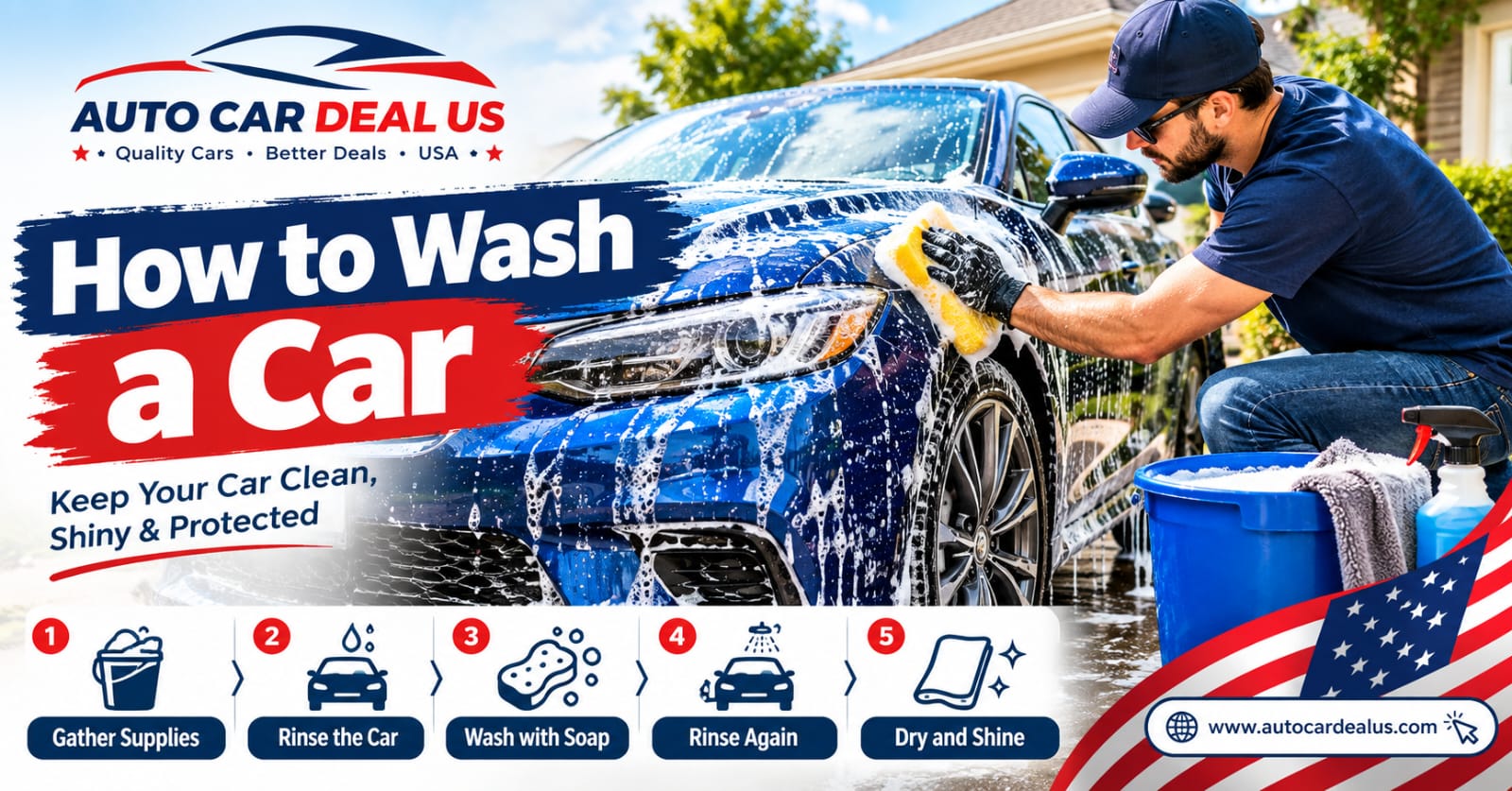
Learning how to wash a car properly helps protect its appearance. Drivers who want to wash a car in USA should understand basic cleaning techniques. Road dust, pollen, bird droppings, salt, and grime can affect automotive paint. New York vehicles often face seasonal dirt, winter salt, and urban pollutants. AAA recommends dedicated car wash soap instead of household dish detergents. Proper cleaning can also support a vehicle’s exterior appearance and resale appeal. A consistent washing routine makes vehicle maintenance easier throughout changing seasons.How to Wash a Car
Choose the Right Location and Time.How to Wash a Car
Choose a shaded location before beginning your exterior car cleaning. Direct sunlight can make water and soap dry too quickly. This can leave mineral deposits, streaks, and unwanted water spots behind. A cool vehicle surface generally makes washing easier and more controlled. New York drivers should also consider weather conditions before starting. Avoid washing immediately before heavy rain when possible for better results. Check the vehicle surface for loose dirt, leaves, and other debris. Prepare all cleaning supplies before spraying water onto the vehicle. This preparation keeps the washing process organized and reduces unnecessary water consumption.How to Wash a Car
Gather Essential Car Washing Supplies
Proper equipment makes hand washing safer and more effective for automotive paint. Start with two buckets, clean water, and quality car wash soap. Use a microfiber wash mitt for gentle contact with painted surfaces. Keep separate microfiber towels available for drying and glass cleaning. A soft wheel brush helps reach narrow areas around tires and rims. You can also use a hose with an adjustable spray nozzle. Avoid abrasive sponges because trapped dirt can create fine scratches. AAA recommends microfiber materials because they help reduce potential paint surface damage. Keep wheel-cleaning tools separate from paint-cleaning equipment whenever possible.
Rinse the Vehicle Before Washing
Begin by thoroughly rinsing the entire vehicle with clean water. This step loosens surface dirt before your wash mitt touches paint. Pay special attention to wheel wells, lower panels, and rocker areas. These locations commonly collect road grime, mud, salt, and brake dust. Rinsing first reduces the amount of abrasive material remaining on surfaces. Use moderate water pressure rather than unnecessarily aggressive spraying techniques. Work around the vehicle systematically to avoid missing hidden areas. New York vehicles may need additional rinsing after winter driving. Salt and road residue should receive careful attention during colder months.
Use the Two-Bucket Washing Method
The two-bucket method helps separate clean soap water from dirty rinse water. Fill one bucket with automotive shampoo and another with clean water. Dip your microfiber mitt into the soapy bucket before cleaning. Wash one small section before rinsing the mitt thoroughly. This process helps remove trapped grit before returning to painted surfaces. Always clean the vehicle from the roof toward lower panels. Lower areas usually contain more dirt, making them less suitable initially. Rinse each section before soap residue dries onto the surface. AAA specifically recommends this method for reducing dirt transfer during washing.
Clean Wheels, Tires, and Lower Areas.How to Wash a Car
Wheels and tires require separate cleaning tools because they collect heavy contaminants. Brake dust, road salt, mud, and grease can accumulate around wheel surfaces. Follow the product directions carefully and avoid allowing cleaner to dry. A soft wheel brush can reach spokes, lug areas, and narrow openings. Clean tires separately using an appropriate tire brush and cleaning solution. Rinse wheel areas thoroughly before continuing with exterior paint cleaning. Keeping wheel tools separate helps prevent abrasive contamination on painted surfaces. This approach is particularly useful for vehicles driven frequently around busy New York streets.How to Wash a Car
Rinse and Dry the Car Properly
After washing every section, rinse the vehicle thoroughly with clean water. Do not allow soap to remain on painted surfaces for long. Begin drying soon after the final rinse to reduce water spots. Use clean, soft microfiber drying towels for the vehicle’s exterior. Gently blot or glide the towel without applying excessive pressure. Avoid using old household towels that may contain rough fibers. Check mirrors, trim pieces, door handles, and panel gaps for trapped water. A careful drying process leaves the finish cleaner and reduces visible streaking. AAA also recommends fluffy microfiber cloths for properly drying washed vehicles.
Protect the Paint After Washing.How to Wash a Car
A clean vehicle can benefit from additional protection after regular washing. Wax, paint sealants, or suitable ceramic products can help protect exterior surfaces. Always follow the manufacturer’s directions before applying any protective automotive product. Make sure the paint is completely clean and dry before application. Applying protection in shade can help prevent premature drying and streaking. Waxing can also make future cleaning easier by reducing surface contamination. Drivers should choose products compatible with their vehicle’s paint and existing coatings. Matte finishes require specialized care because conventional polishing may change their appearance. Always test unfamiliar products on an inconspicuous area first.
Reduce Water Waste and Dirty Runoff
Responsible vehicle washing also involves controlling wastewater and chemical runoff. The EPA recommends commercial car washes because wastewater is properly managed. Commercial facilities may also filter and recycle water during cleaning operations. When washing at home, choose grass or gravel when appropriate. Avoid allowing dirty water to flow directly toward storm drains. Use phosphate-free soaps and minimize unnecessary water consumption whenever possible. A hose nozzle can help control water flow during rinsing. Local requirements can vary, so New York residents should follow applicable rules. Environmentally responsible washing protects waterways while maintaining a clean vehicle.
FAQs About Washing a Car
Washing frequency depends on driving conditions, weather, and vehicle exposure. New York drivers may need more frequent cleaning during winter. Road salt, mud, pollen, and bird droppings can quickly accumulate outside. Regular washing helps prevent contaminants from remaining on painted surfaces. There is no universal schedule suitable for every vehicle owner. Drivers should inspect their vehicles and clean them when visibly dirty. After winter storms, prompt cleaning can help remove accumulated road
