 Auto Car Deal us
Related Articles


How To Check Brake Pads
1. Understanding Brake Pad Condition
Learning how to inspect brake pads can help prevent expensive repairs. Brake Pads in USA are essential components of modern vehicle braking systems. They create friction against brake rotors when you press the brake pedal. This friction slows the wheels and helps your vehicle stop safely. Regular inspections can reveal wear before braking performance becomes seriously affected. New York drivers often encounter traffic, frequent stops, and demanding driving conditions. These conditions can increase brake component wear over time. Checking your brakes regularly supports safer driving and helps maintain reliable stopping performance. How To Check Brake Pads.
2. Know When Brake Pads Need Inspection
Brake pads should be inspected according to your vehicle manufacturer’s maintenance recommendations. Many technicians recommend checking them during routine tire or oil services. However, driving conditions can influence how quickly brake components wear. Frequent city driving usually creates more braking cycles than highway driving. Heavy traffic around New York can therefore increase brake pad usage. Mountainous roads, towing, and aggressive braking can also accelerate friction material loss. Drivers should inspect the braking system whenever unusual symptoms appear. Early attention can prevent damaged rotors and more expensive brake repairs. How To Check Brake Pads.
3. Gather the Necessary Tools
A basic inspection requires several tools and appropriate safety equipment. You may need a flashlight, wheel chocks, gloves, and a jack. A jack should always be used according to its manufacturer’s instructions. Jack stands provide additional support when the vehicle requires lifting. Never depend solely on a vehicle jack during an inspection. Some vehicles allow brake pads to be viewed through wheel openings. Other vehicles require wheel removal for a clearer inspection. Your owner’s manual can identify suitable lifting points and inspection procedures. Always work on a stable, level surface before beginning any inspection. How To Check Brake Pads.
4. Inspect Brake Pads Through the Wheel
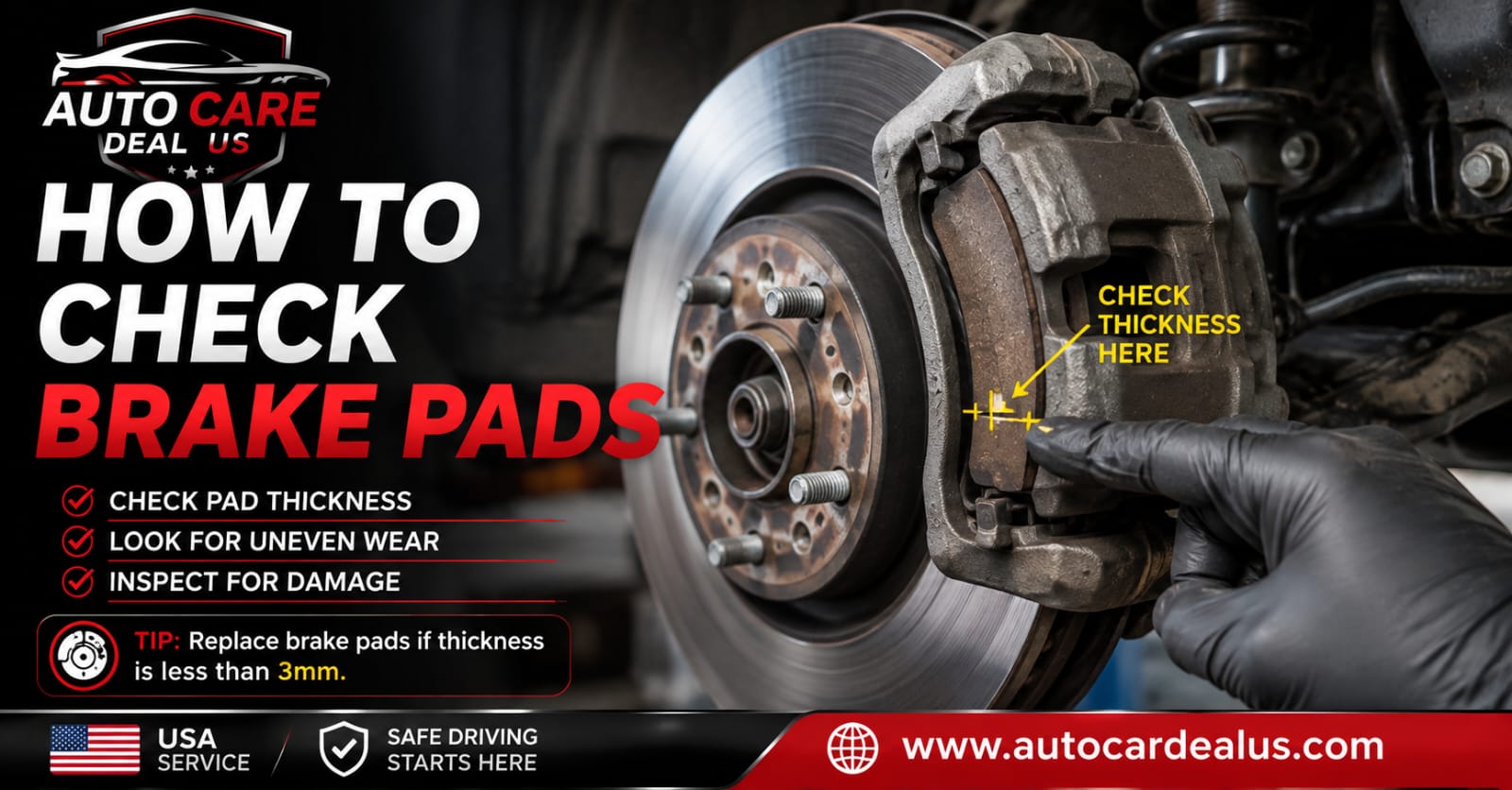
Start by examining the brake assembly through the wheel spokes. Use a flashlight to improve visibility around the brake caliper. Look for the friction material attached to the brake pad backing plate. Healthy pads should have visible material remaining above the backing plate. Extremely thin material indicates that replacement may be necessary soon. Some manufacturers provide specific minimum thickness recommendations for their vehicles. Avoid relying on appearance alone when determining brake system condition. Brake pads can sometimes wear unevenly between their inner and outer positions. A professional inspection may identify problems that are difficult to see. How To Check Brake Pads.
5. Measure Brake Pad Thickness
Measuring thickness provides more useful information than simply looking at the pads. Some inspections can be completed without removing the wheel. A mechanic may use a brake pad thickness gauge for accurate measurement. Compare the measured thickness with the vehicle manufacturer’s specifications. Very thin friction material generally indicates that replacement is approaching. Uneven thickness can suggest problems with caliper operation or other components. Never ignore significant differences between inner and outer brake pads. Proper measurements can help determine whether additional brake service is required. Always follow professional guidance when measurements fall near minimum specifications. How To Check Brake Pads.
6. Look for Uneven Brake Pad Wear
Uneven wear can indicate underlying problems within the braking system. One pad may become thinner because a caliper piston is sticking. Slide pins can also cause uneven movement and irregular friction. Compare the visible thickness of pads on both sides carefully. Excessive differences should receive attention from a qualified automotive technician. Uneven wear can reduce braking efficiency and accelerate rotor damage. Drivers may also notice pulling, vibration, or unusual pedal behavior. These symptoms should not be ignored during routine vehicle maintenance. Addressing the underlying issue can help protect new brake components.
7. Check for Warning Signs
Several warning signs can indicate worn or damaged brake pads. Squealing sounds may occur when friction material becomes significantly worn. Grinding noises can indicate severe wear and possible rotor contact. A vehicle may also produce vibrations during braking when components become damaged. A brake warning light can indicate a braking system problem. Soft or spongy pedals may require immediate professional diagnosis. Longer stopping distances should also be treated as a serious warning. Drivers should avoid delaying repairs when braking performance changes noticeably. Safe braking depends on properly functioning pads, rotors, calipers, and hydraulic components.
8. Consider New York Driving Conditions
New York driving conditions can place additional demands on braking systems. Heavy traffic often requires repeated acceleration and frequent braking throughout daily journeys. Stop-and-go driving can therefore increase friction and brake component temperatures. Winter weather may introduce road salt, moisture, and debris around braking components. Corrosion can affect brake hardware and other exposed metal parts. Drivers should pay attention to changes after prolonged winter driving. Regular inspections can help identify corrosion, uneven wear, and other developing issues. Maintaining clean and functional braking components supports safer urban and highway driving. Local driving habits should influence how frequently brake inspections are performed.
9. Decide When Replacement Is Necessary
Brake pad replacement depends on thickness, condition, driving habits, and manufacturer specifications. Replacement should occur before friction material reaches an unsafe level. Severely worn pads can allow backing plates to contact brake rotors. This contact may create grinding noises and expensive rotor damage. Mechanics may recommend replacing pads in axle pairs for balanced braking. Rotors should also be inspected whenever brake pads require replacement. Some vehicles may require additional hardware or caliper servicing. Using compatible replacement parts helps maintain proper braking performance. Always choose components that meet your vehicle manufacturer’s specifications.
10. Maintain Your Braking System Regularly
Regular brake inspections are an important part of responsible vehicle maintenance. Drivers should combine brake checks with tire and suspension inspections. Monitoring brake fluid levels can also reveal potential maintenance concerns. However, brake fluid condition requires different inspection procedures than pad thickness. Keep records of brake services to track replacement intervals over time. Professional inspections are especially valuable when symptoms appear unexpectedly. Qualified technicians can identify problems that basic visual checks may miss. For New York drivers, regular maintenance can support dependable braking during demanding traffic conditions. Proper brake care ultimately improves safety, vehicle control, and long-term maintenance costs.
FAQs About Checking Brake Pads
How often should brake pads be checked?
Brake pads should generally be inspected during routine vehicle maintenance services. Follow the inspection schedule recommended by your vehicle manufacturer. Frequent city driving may justify more frequent brake system checks. Always inspect the brakes sooner when warning signs appear.
What signs indicate worn brake pads?
Common signs include squealing, grinding, vibration, and reduced braking performance. Uneven pad thickness can also indicate potential braking system problems. A warning light may signal an issue requiring professional diagnosis. Longer stopping distances should always receive immediate attention.
Why is checking brake pad thickness important?
Brake pad thickness helps determine remaining friction material and replacement needs. Thin pads may reduce braking performance and increase rotor damage risks. Measuring wear can also reveal uneven braking component operation. Regular checks help identify problems before they become more expensive.
When should brake pads be replaced?
Brake pads should be replaced when they reach the manufacturer’s minimum specification. Replacement may also be necessary when pads wear unevenly or become damaged. Grinding noises require prompt inspection because rotors may already be affected. Always have questionable brake conditions evaluated by a qualified technician.
