 Auto Car Deal us
Related Articles
Understanding Regular Vehicle Maintenance
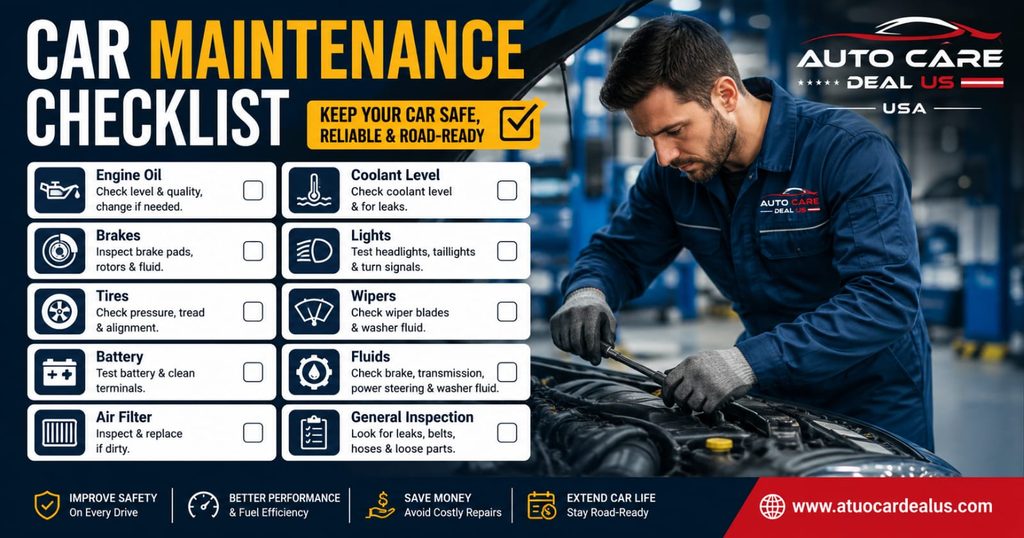
A proper Car Maintenance Checklist routine helps protect your vehicle’s performance.
New York drivers face traffic, weather changes, road salt, and rough surfaces.These conditions can increase wear on tires, brakes, batteries, and suspension parts.Regular inspections can detect minor issues before they develop into costly repairs.The New York DMV recommends following manufacturer maintenance schedules between inspections.Auto Car Deal US recommends combining scheduled service with routine visual checks.
Your owner’s manual remains the best source for vehicle-specific maintenance intervals.
Check Engine Oil and Essential Fluids
Engine oil reduces friction between internal components while helping regulate engine temperatures.Check the oil level according to your manufacturer’s recommended inspection procedure.Replace engine oil and filters at the specified mileage or time interval.Also inspect coolant, brake fluid, transmission fluid, and washer fluid levels.Coolant checks should always happen after the engine becomes completely cool.Look underneath your vehicle for unusual fluid leaks or wet spots.
Dark oily stains may indicate engine oil leakage requiring professional inspection.
Car Maintenance Checklist, Wheels, and Tire Pressure
Tires directly affect braking, handling, fuel economy, and overall driving safety.
Check tire pressure regularly using the manufacturer’s recommended pressure specifications.
The correct pressure appears on your driver’s door information label.
Inspect tread depth, sidewalls, bulges, cracks, cuts, and uneven wear patterns.
Rotate tires according to the vehicle manufacturer’s recommended maintenance schedule.
Do not forget checking the spare tire’s inflation and physical condition.
New York inspections also evaluate tire condition and minimum tread requirements.
Maintain the Brake System and Car Maintenance Checklist
A reliable braking system remains essential during busy New York driving conditions.
Inspect brake pads, rotors, calipers, hoses, lines, and brake fluid regularly.
Listen for squealing, grinding, scraping, or unusual braking sounds while driving.
A soft pedal or vehicle pulling sideways requires prompt professional diagnosis.
New York safety inspections specifically evaluate multiple brake system components.
Never ignore dashboard brake warning lights or reduced stopping performance.
Early brake service can prevent more expensive repairs involving rotors and calipers.
Test the Battery and Charging System and Car Maintenance Checklist
Battery performance can decline because of extreme temperatures and electrical demands.
Inspect battery terminals for corrosion, looseness, or damaged cable connections.
Ensure the battery remains securely mounted inside the engine compartment.
Have the battery tested when starting becomes slower than normal.
New York transportation guidance recommends testing batteries before demanding summer driving.
A technician can also inspect charging performance from the alternator.
Addressing weak batteries early can reduce unexpected roadside breakdowns.
6. Inspect Belts, Hoses, and Cooling Components
Belts and hoses support several important engine and cooling system functions.
Inspect rubber components for cracking, fraying, swelling, glazing, or visible deterioration.
Damaged belts can affect the alternator, water pump, or air-conditioning compressor.
Cooling hoses should remain flexible without leaks or significant surface damage.
New York transportation guidance recommends checking radiator hoses and fan belts.
Replace worn components according to manufacturer recommendations or professional inspection findings.
Preventive replacement can help avoid overheating and unexpected mechanical failures.
7. Replace Air Filters and Wiper Blades
Clean air filters support proper engine airflow and efficient combustion.
Replace clogged filters according to the vehicle’s recommended service schedule.
Dusty roads and urban traffic can sometimes accelerate filter contamination.
Cabin air filters also help maintain cleaner airflow inside the passenger compartment.
Inspect windshield wipers whenever they leave streaks or miss wet areas.
Replace deteriorated blades before heavy rain creates dangerous visibility problems.
New York guidance recommends checking wipers, washer fluid, lights, and mirrors.
8. Check Lights, Safety Equipment, and Visibility
Working lights improve visibility during nighttime, rain, snow, and congested traffic.
Inspect headlights, brake lights, turn signals, hazard lights, and reverse lights.
Clean dirty lenses because accumulated grime can reduce effective illumination.
Check mirrors, windshield condition, washer spray, and windshield defroster operation.
Also inspect seat belts for damage, looseness, or unusual operating problems.
New York safety inspections include lighting and seat belt requirements.
Keep an emergency kit containing basic supplies for unexpected roadside situations.
9. Follow Seasonal and Mileage-Based Service
Maintenance requirements can change according to mileage, climate, and driving conditions.
Highway commuting, short trips, towing, and severe weather can increase component wear.
Before summer, inspect cooling systems, air conditioning, tires, and battery condition.
Before winter, check battery strength, coolant protection, tires, and windshield equipment.
Follow manufacturer schedules for spark plugs, filters, belts, and transmission servicing.
Do not rely solely on fixed mileage without considering driving conditions.
A documented service history can also support better resale value later.
10. Keep a Professional Maintenance Schedule
A written maintenance record makes vehicle care easier to manage consistently.
Record oil changes, tire rotations, inspections, repairs, and replacement dates.
Schedule professional inspections whenever warning signs appear during routine driving.
Unusual vibrations, odors, noises, leaks, or dashboard warnings deserve immediate attention.
New York drivers should also maintain compliance with required safety inspections.
Auto Car Deal US recommends choosing qualified technicians for complex mechanical repairs.
Consistent preventive maintenance supports reliability, safety, efficiency, and long-term ownership value.
Frequently Asked Questions
How often should I check my Car Maintenance Checklist items?
Check tires, fluid levels, lights, and visible components regularly throughout ownership.
Follow the manufacturer’s schedule for oil changes and major service intervals.
Monthly inspections can help identify developing problems before they become expensive.
What vehicle components should I check before driving in New York?
Check tire pressure, fluid levels, brakes, lights, wipers, and battery condition.
Also inspect your windshield and confirm that seat belts operate correctly.
New York roads can expose vehicles to traffic congestion and harsh conditions.
Why does preventive Car Maintenance Checklist matter for vehicle owners?
Preventive maintenance helps identify worn components before serious mechanical problems develop.
It can improve reliability, fuel efficiency, safety, and long-term vehicle performance.
Regular servicing may also reduce unexpected repair expenses during daily transportation.
When should I schedule professional vehicle Car Maintenance Checklist?
Schedule professional service according to your owner’s manual and mileage requirements.
Book an inspection sooner when warning lights or unusual symptoms appear.
Professionaldiagnosis is especially important for brake, steering,suspension, and engine problems.
*Conclusion:* A consistent maintenance routine protects your vehicle and driving investment.
Use this checklist alongside your manufacturer’s service recommendations for better results.
For New York drivers, regular checks can support safer and more reliable transportation.