 Auto Car Deal us
Related Articles



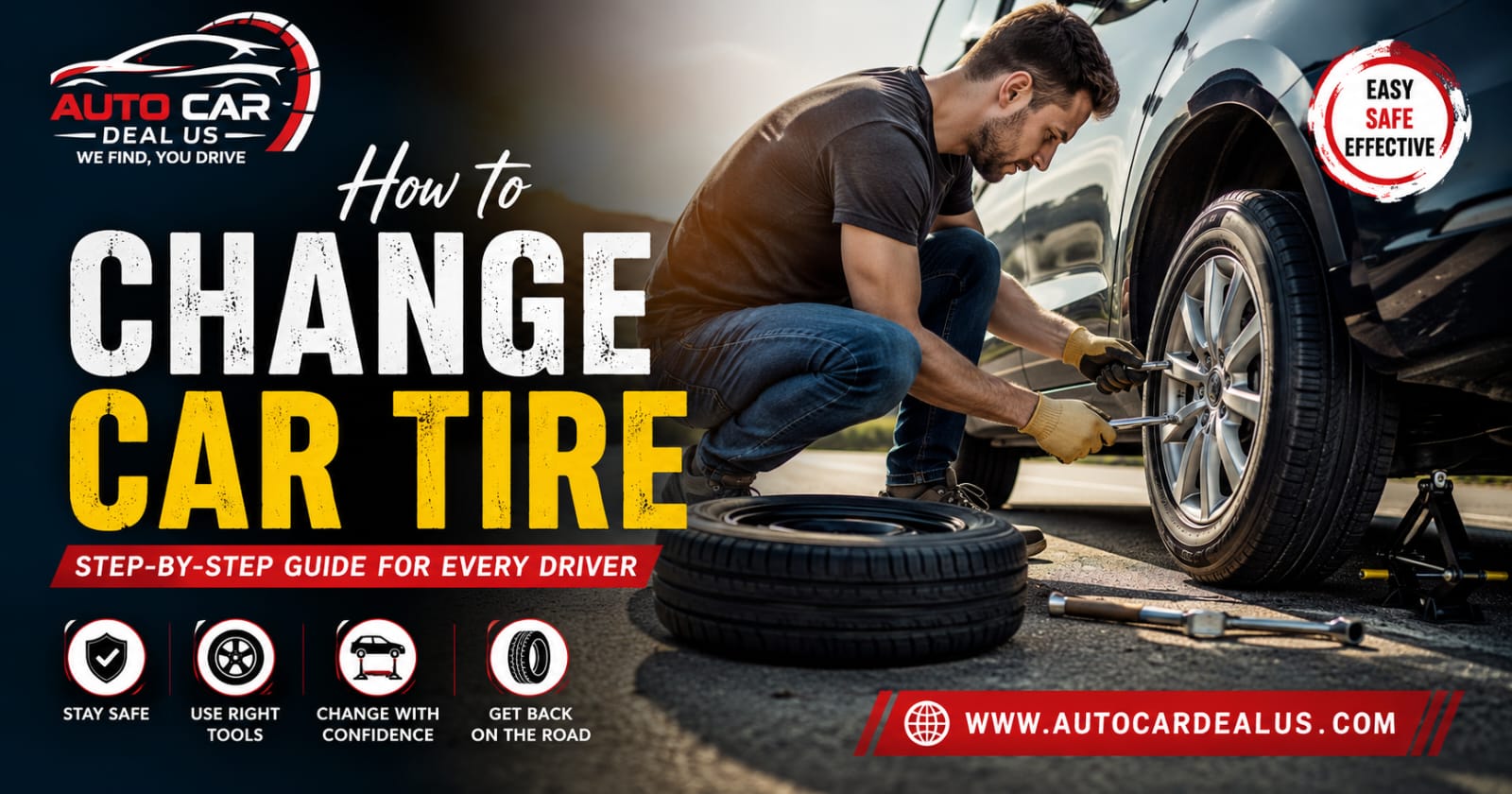
How To Change Car Tire
Understanding Car Tire Replacement
Learning how to Change Car Tire in USA can help during unexpected roadside emergencies.A flat tire can happen because of punctures, damaged tread, or pressure loss.New York drivers may encounter potholes, road debris, construction zones, and harsh weather.Knowing the correct replacement procedure can reduce unnecessary roadside risks.Before beginning, always consult your owner’s manual for vehicle-specific instructions.AAA recommends stopping away from traffic on solid, level ground whenever possible.
Auto Car Deal US recommends practicing the process before an emergency occurs.
Find a Safe Location
Safety should always come before removing any wheel or operating the jack.If possible, move your vehicle completely away from moving traffic.Choose firm, level ground that provides enough space for changing tires.Turn on your hazard lights immediately after safely stopping the vehicle.Engage the parking brake and place automatic transmissions into Park.Manual transmissions should remain in gear while the engine remains switched off.Never attempt roadside repairs where passing traffic creates immediate danger.
Prepare the Necessary Tools For Car Tire
Gather the spare tire, vehicle jack, and lug nut wrench.
Your owner’s manual explains where these tools are stored inside your vehicle.Many vehicles keep spare tires underneath cargo floors or inside trunks.Some modern vehicles instead include tire repair kits or run-flat tires.Useful additional equipment includes gloves, a flashlight, and tire pressure gauge.Wheel chocks can help prevent unwanted vehicle movement during tire replacement.Check your spare tire periodically because unused tires can gradually lose pressure.
Loosen the Lug Nuts and Car Tire
Remove the wheel cover if it blocks access to your lug nuts.Keep the vehicle resting on the ground during this initial step.Place the lug wrench securely over each lug nut before turning.Turn each nut counterclockwise until it becomes slightly loose.Do not completely remove the lug nuts while the vehicle remains grounded.The vehicle’s weight helps keep the wheel stable during this process.AAA recommends loosening lug nuts before raising the vehicle with its jack.
Position and Operate the Jack
Locate the correct jack point using your owner’s manual instructions.Position the jack beneath the vehicle’s designated structural lifting point.Never place the jack against plastic trim,body panels, or unsuitable surfaces.Raise the vehicle slowly until the damaged tire clears the ground.Keep your hands and body away from areas beneath the raised vehicle.Never crawl underneath a vehicle supported only by a jack.Stop immediately if the vehicle becomes unstable or the jack shifts position.
Remove the Flat Tire
Once the tire clears the ground, completely remove each lug nut.
Place the lug nuts somewhere secure where they cannot roll away.
Hold the tire firmly with both hands before pulling it outward.
Remove the wheel carefully without disturbing the vehicle’s position.Place the damaged tire flat beside the vehicle after removing it.Avoid placing body parts beneath the vehicle during this entire process.Inspect the wheel hub briefly for obvious damage before installing the spare.
Install the Spare Tire
Lift the spare tire carefully and align its holes with wheel studs.
Push the wheel inward until it sits firmly against the hub.
Install each lug nut by hand before using the wrench.Tighten the lug nuts gradually using a diagonal or star pattern.This pattern helps seat the wheel evenly against the mounting surface.Do not fully tighten the nuts while the wheel remains freely suspended.AAA recommends using a star pattern when tightening replacement wheel nuts.
Lower the Vehicle and Car Tire
Lower the vehicle carefully until the spare tire contacts the ground.
Keep lowering slowly while ensuring the vehicle remains stable throughout.Remove the jack after the vehicle becomes fully supported again.Use the lug wrench to tighten each nut in a star pattern.Follow the manufacturer’s specified torque requirements whenever possible.Improper wheel tightening can create vibration or wheel mounting problems.If available, use a torque wrench for accurate final tightening specifications.
Check Spare Tire Pressure
Always check the spare tire’s inflation pressure before continuing your journey.Temporary spare tires often require different presure than standard vehicle tires.Follow the pressure information printed on the spare or owner’s manual.Temporary donut tires are designed for limited emergency driving only.AAA advises following manufacturer limits because spare tire specifications vary between vehicles.Drive cautiously and avoid unnecessary travel with a temporary spare installed.Visit a qualified tire shop promptly for repair or replacement of the damaged tire.
Inspect and Prevent Future Tire Problems
After completing the replacement, store the jack and wrench securely.Place the damaged tire in its designated storage location if possible.Check your remaining tires for tread wear, cracks, punctures, and uneven wear.Maintain recommended tire pressure to support handling and fuel efficiency.Regular tire rotations can promote more even tread wear over time.New York drivers should inspect tires frequently because potholes can cause damage.Professional tire inspections can identify problems before they create roadside emergencies.
Frequently Asked Questions
Move your vehicle away from traffic and choose firm, level ground.
Turn on hazard lights, engage the parking brake, and gather your tools.Loosen lug nuts, raise the vehicle, replace the tire, and tighten securely.
What equipment is required to replace a car tire?
You generally need a spare tire, jack, and compatible lug wrench.
A flashlight, gloves, tire gauge, and wheel chocks can provide additional convenience.Always verify your vehicle’s equipment using the owner’s manual.
Why should you loosen the lug nuts before lifting the CarTire ?
Loosening nuts while grounded keeps the wheel stable during initial removal.The vehicle’s weight prevents the wheel from rotating while applying wrench force.Removing them after lifting can make the process more difficult.
When should a temporary spare tire be replaced with a regular Car Tire ?
Replace or repair the damaged standard tire as soon as possible.
Temporary spares should only provide short-term transportation during emergencies.Follow the speed and distance limits specified by your vehicle manufacturer.
